ON-PAGE SEO Expert
A Complete Guide for Higher Rankings
In today’s competitive digital landscape, mastering On-Page SEO is crucial for improving your website’s visibility in search engine results. It involves optimizing individual web pages to rank higher and earn more relevant traffic. From content quality to HTML tags and internal links, every on-page element matters.
This guide breaks down the key strategies to help your pages perform at their best.

Contents





1. On-Page SEO Basics + Template
On-Page SEO is the process of optimizing a webpage’s content and HTML to improve search rankings and user experience. It covers:
- Titles
- Meta tags
- Headings
- Keywords
- URLs
- Links and images
ensuring search engines understand your page while keeping it valuable and engaging for visitors.
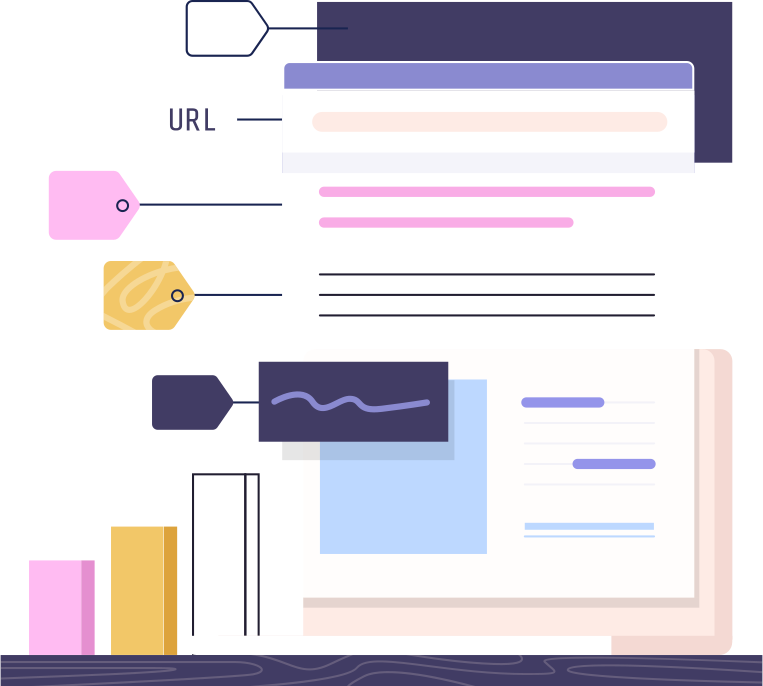
On-Page SEO (also called on-site SEO) is the process of optimizing individual web pages to rank higher in search engine results and attract more relevant traffic. It involves improving both the visible content and the HTML source code of a page so that search engines understand its topic and value for users.
Think of it this way:
If your website were a shop, on-page SEO is the way you design the shop’s interior—arranging products neatly, adding price tags, improving lighting, and ensuring customers can easily find what they want. It’s all about making your page user-friendly and search-engine-friendly at the same time.
Key Elements of On-Page SEO
- Title Tags – The page’s main clickable headline in search results.
- Meta Descriptions – Short summaries to encourage clicks.
- Headings (H1, H2, H3) – Organize content for clarity.
- Keyword Placement – Naturally inserting relevant search terms.
- URL Structure – Short, descriptive, and keyword-rich.
- Internal Linking – Connecting related pages.
- Image Optimization – Alt text, file size, and format.
- Page Speed – Fast loading for a better user experience.
- Mobile Friendliness – Responsive design for all devices.
- Structured Data – Schema markup for enhanced SERP features.
On-Page SEO vs Off-Page SEO
Although both types of SEO aim to increase rankings, they focus on different areas of optimization.
|
Feature |
On-Page SEO |
Off-Page SEO |
|
Definition |
Optimizing elements on your website to improve visibility in search engines. |
Building your website’s authority & reputation through external signals. |
|
Goal |
Improve user experience and make content easily understandable to search engines. |
Increase trust and authority so search engines rank you higher. |
|
Examples |
Title tags, meta descriptions, headings, content quality, internal links, image alt text, site speed. |
Backlinks from other websites, social media marketing, influencer outreach, online PR. |
|
Control |
You have full control over changes. |
You have limited control, as it depends on others linking or mentioning your site. |
|
Impact Speed |
Can show improvements relatively quickly once optimized. |
Often takes longer to show results due to relationship building and authority growth. |
💡 In short:
- On-Page SEO is what you do on your own site.
- Off-Page SEO is what others do that impacts your site.
Both are essential, but on-page SEO is the foundation—without it, off-page efforts won’t be as effective.
Why Is On-Page SEO Important?
Search engines like Google use complex algorithms to decide which page best matches a user’s search query. On-page SEO helps your site communicate directly with these algorithms by:
- Improving Relevance
Well-optimized content signals to search engines that your page closely matches search intent. - Enhancing User Experience (UX)
Fast-loading, easy-to-navigate pages keep visitors engaged and reduce bounce rates. - Increasing Organic Rankings
Proper on-page optimization can push your pages higher in search results without relying solely on paid ads. - Boosting Click-Through Rates (CTR)
Compelling titles and meta descriptions make users more likely to click your listing. - Supporting Other SEO Strategies
Off-page SEO like link building works better when the destination page is already optimized.
📊 Stat: A Backlinko study found that pages with well-structured content and strong on-page SEO factors tend to rank significantly higher in Google SERPs.
A Quick Way to Do On-Page SEO
If you’re short on time, here’s a fast-track on-page SEO process to cover the essentials.
Step 1: Research and Select a Target Keyword
- Use tools like Google Keyword Planner, Ahrefs, or Semrush.
- Choose a keyword with moderate competition and high relevance to your content.
- Focus on search intent—know what the user is looking for.
Step 2: Optimize Your Title Tag
- Keep it under 60 characters.
- Place the target keyword near the start.
- Make it compelling with power words (e.g., “Guide,” “Checklist,” “Best”).
Example:
✅ On-Page SEO Guide for 2025: Boost Your Google Rankings Fast
Step 3: Write a Compelling Meta Description
- Keep it 150–160 characters.
- Include the keyword and a call-to-action.
Example:
“Learn the latest on-page SEO strategies for 2025. Improve rankings, attract traffic, and grow your business with our easy-to-follow guide.”
Step 4: Structure Content with Headings
- One H1 per page (main keyword here).
- Use H2 and H3 for subtopics.
- Sprinkle secondary keywords naturally.
Step 5: Use Short, Keyword-Friendly URLs
- Avoid numbers, dates, and unnecessary words.
- Example:
❌ www.example.com/article?id=123
✅ www.example.com/on-page-seo-guide
Step 6: Add Internal and External Links
- Link to related pages on your site (internal).
- Link to reputable sources (external) to increase trust.
Step 7: Optimize Images
- Use descriptive filenames (e.g., on-page-seo-checklist.webp).
- Add alt text with keywords.
- Compress images for faster load time.
Step 8: Check Page Speed
- Use Google PageSpeed Insights or GTmetrix.
- Optimize by:
- Compressing images
- Minifying CSS/JS
- Using a content delivery network (CDN)
- Compressing images
Step 9: Make It Mobile-Friendly
- Use a responsive design.
- Ensure clickable elements are large enough on mobile.
- Test with Google’s Mobile-Friendly Test tool.
Step 10: Add Schema Markup
- Use JSON-LD format for:
- Articles
- Products
- FAQs
- Articles
Test with Google Rich Results Test.
On-Page SEO Template (Checklist)
| Element | Best Practice | Example |
|---|---|---|
| Keyword | Choose one main keyword + related terms | on-page SEO |
| Title Tag | ≤ 60 characters, keyword first | On-Page SEO Guide for 2025 |
| Meta Description | 150–160 chars, keyword, CTA | Boost your rankings with our on-page SEO tips. |
| URL | Short, keyword-rich | /on-page-seo-guide |
| H1 Tag | One per page, keyword included | On-Page SEO Guide |
| H2/H3 Tags | Use for structure & secondary keywords | What Is On-Page SEO? |
| Content | 800–2000 words, keyword density 1–2% | Detailed SEO tips |